Chapter 3: Chime in the Roots
The bell-note returned, not as a threat this time, but as a thread—thin and bright—pulling them deeper into the hollow where the fallen log doorway opened like a doorway in a dream.
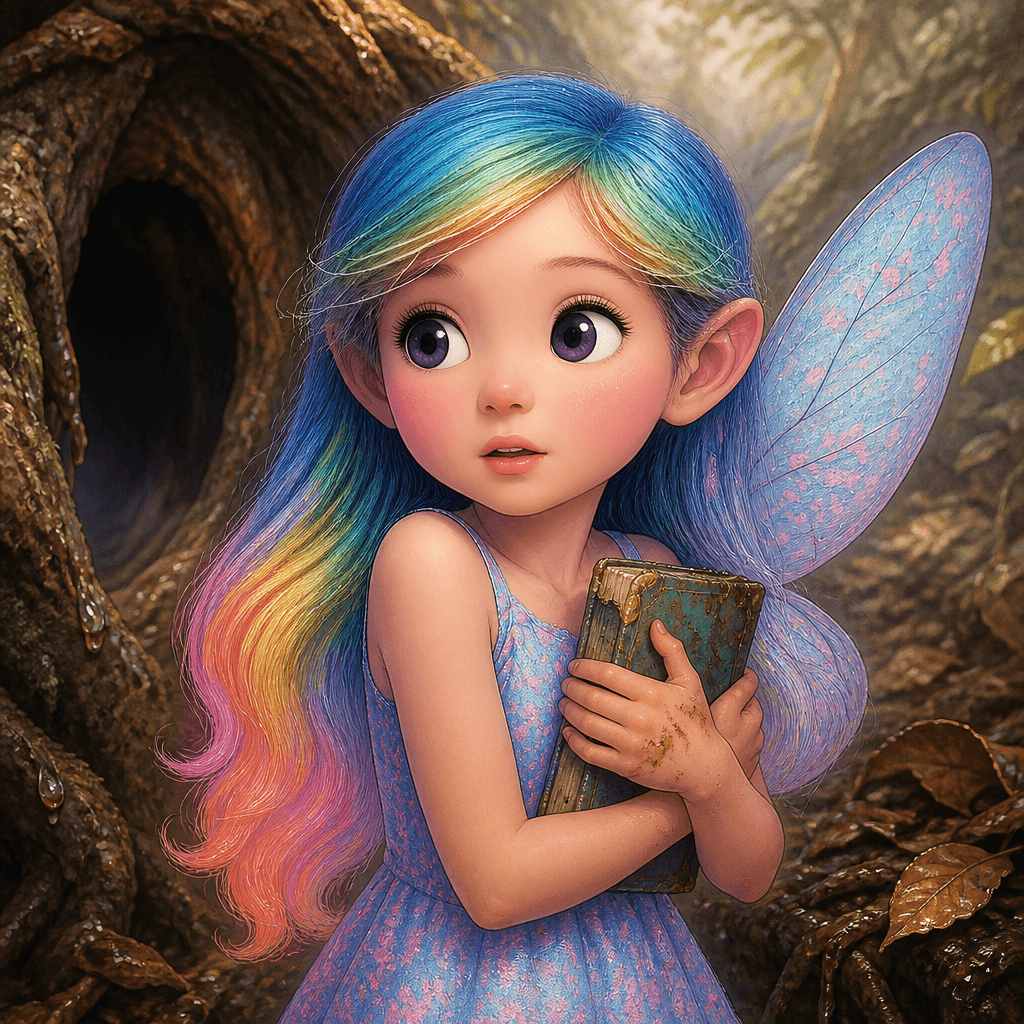
Mila held her notebook close, her fingers smudged with sap from the last puzzle. “It’s coming from inside,” she whispered, as if the Forest could hear her even when she tried not to.
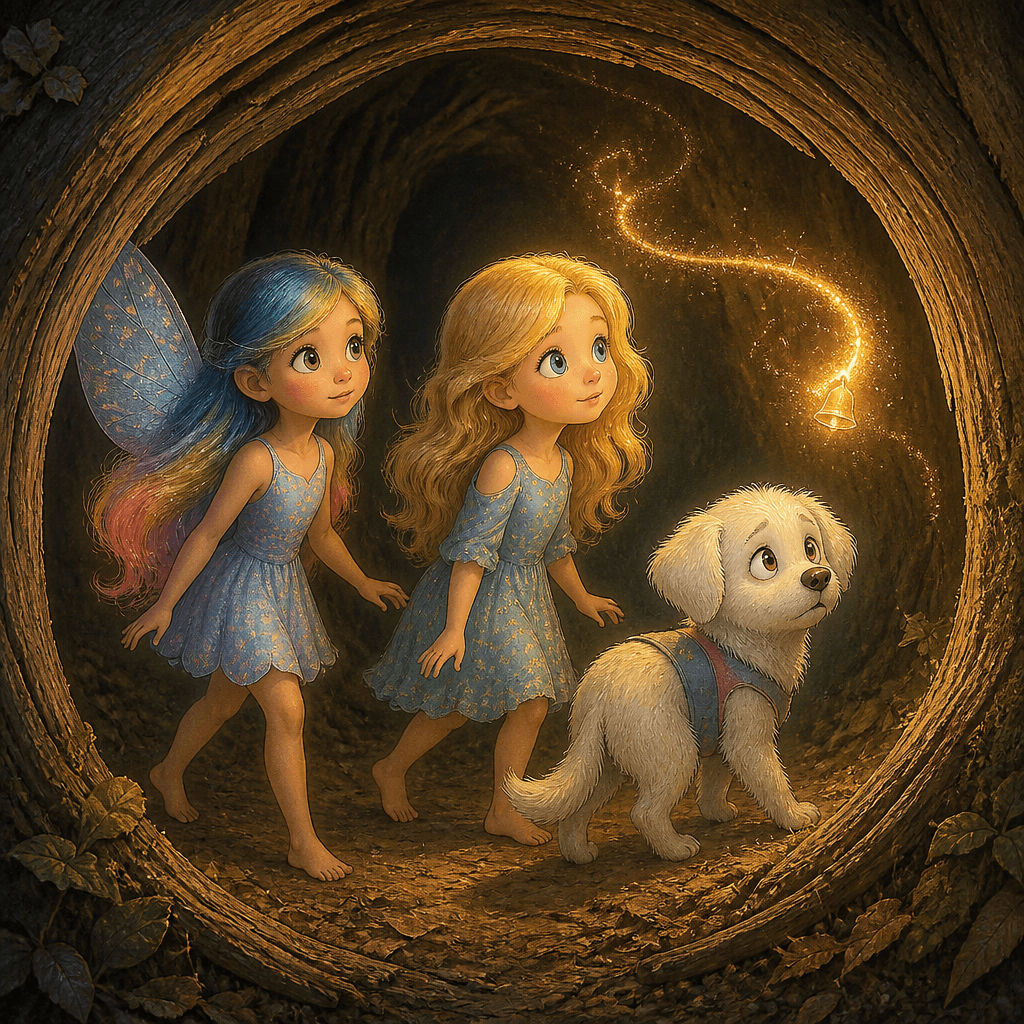
Miran crouched near the roots that had tangled the ground. The air smelled of wet bark and old leaves. Somewhere above, a branch creaked, and the sound that followed—soft, metallic, and gentle—made the hair on his arms lift.
“Do you hear that?” Elsa asked.
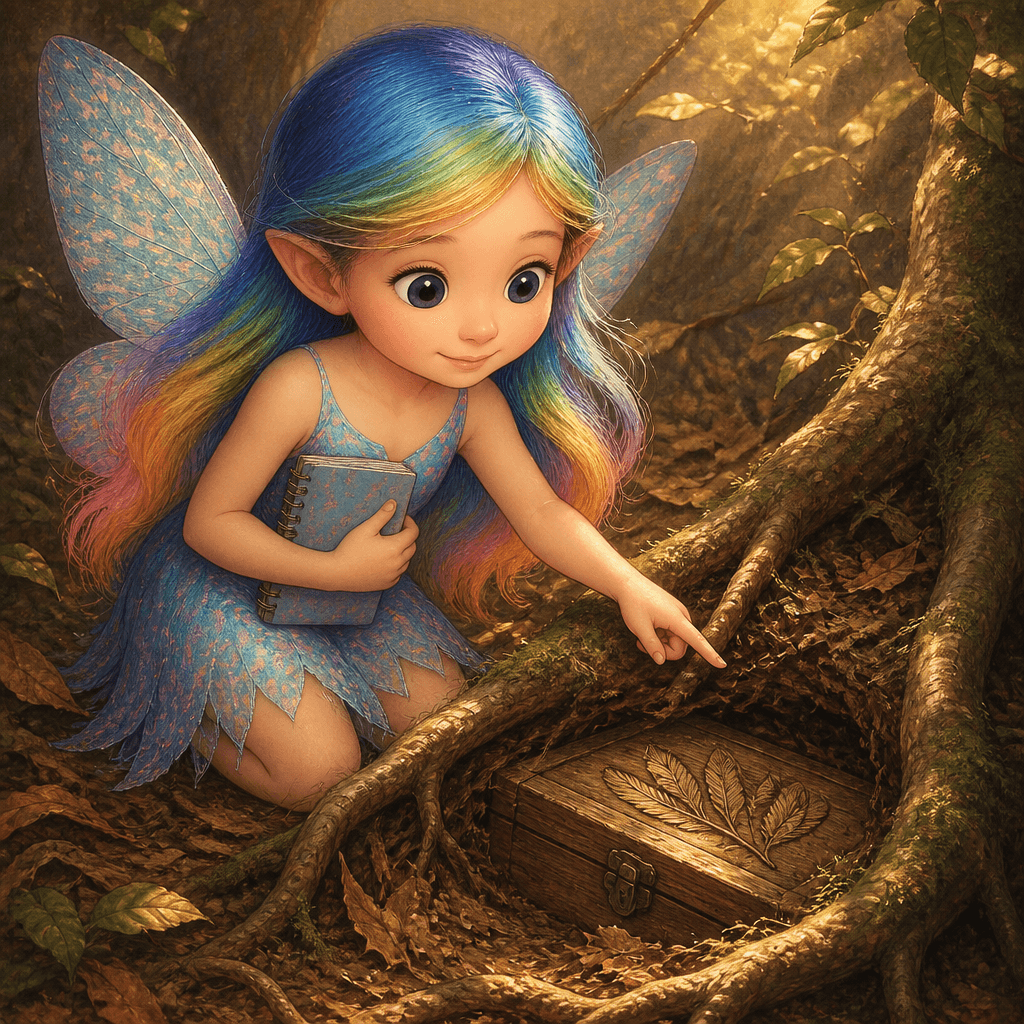
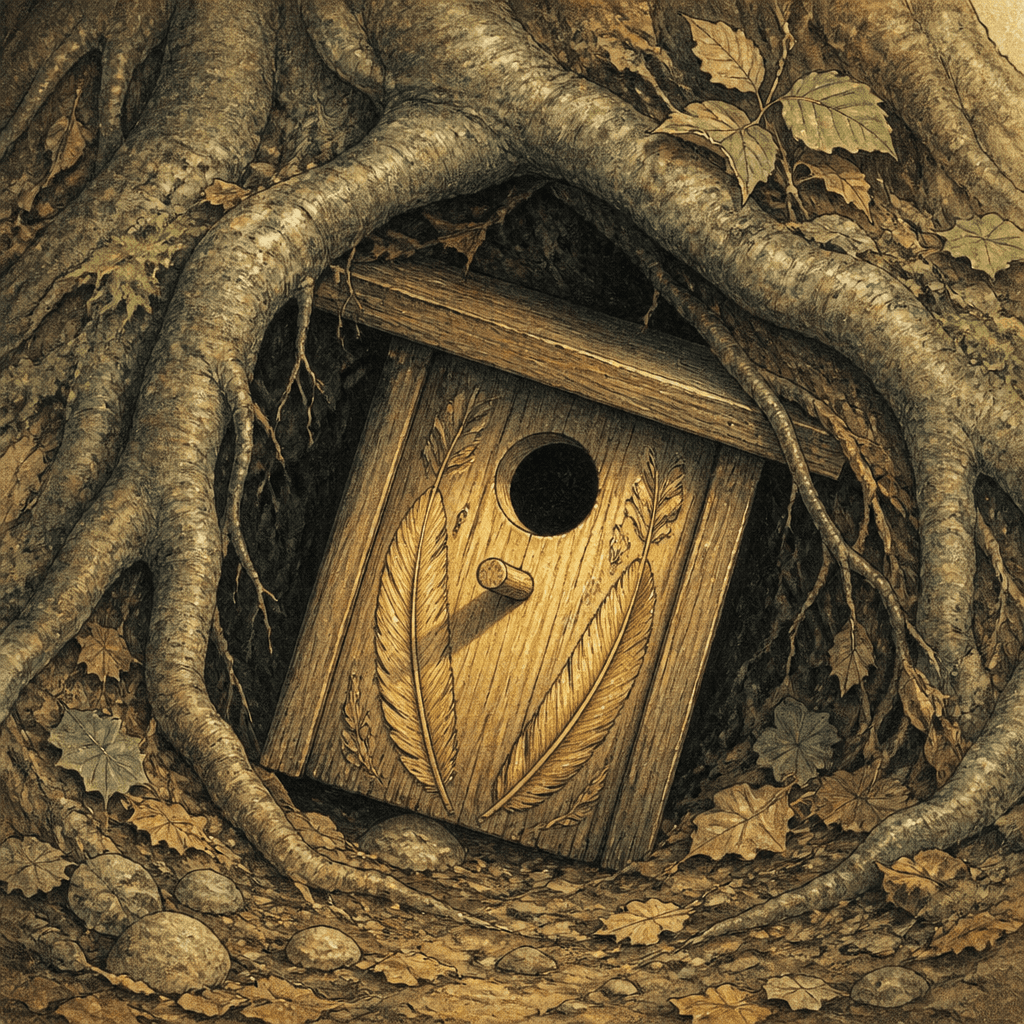
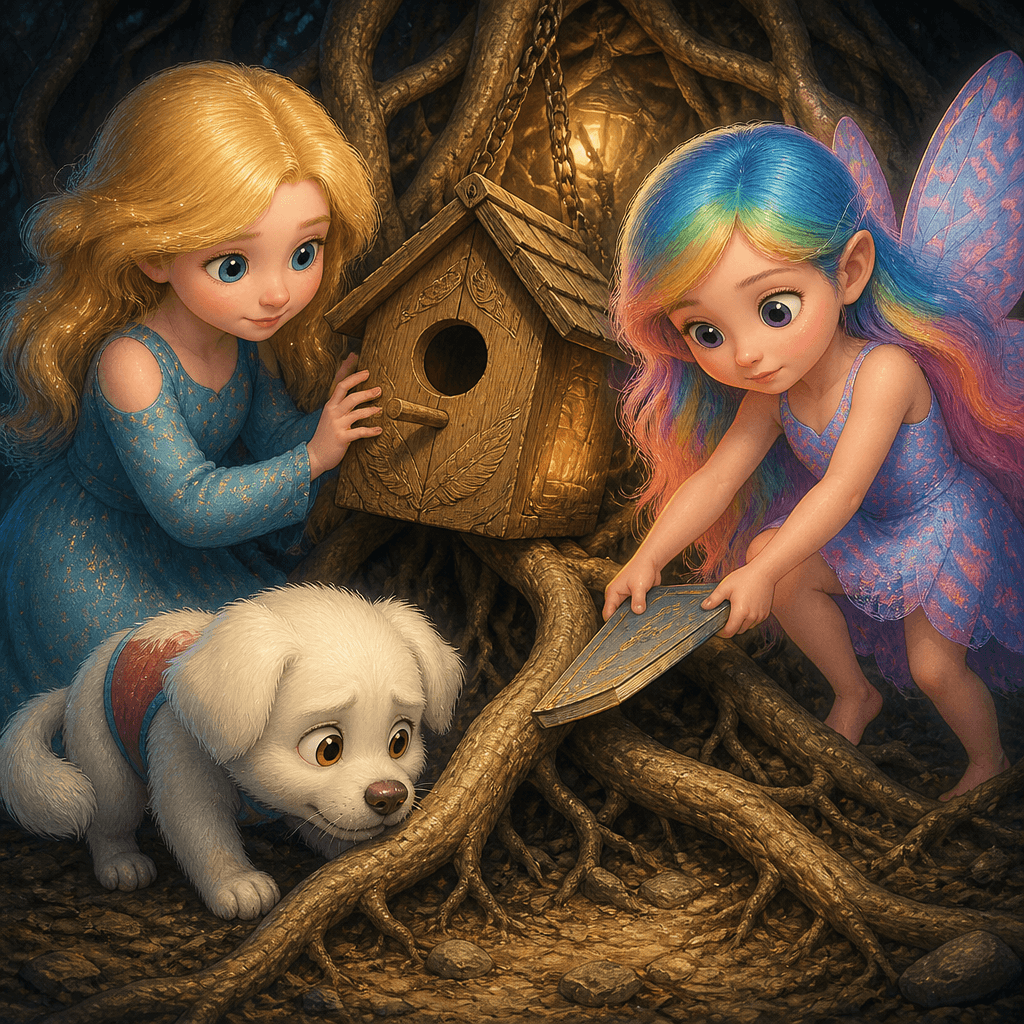
A tiny chime answered. Not the harsh sort that alarms ring with, but a warm, tinkling note that seemed to float between trunks. Mila followed it with her eyes until she spotted something half-buried: a little wooden box, no larger than a bread loaf, its sides carved with feather patterns.
A birdhouse.
But it wasn’t hanging from a branch. It was wedged under roots, tilted as if the Forest had tried to set it down and then—somehow—couldn’t.
Miran’s breath came out shaky. “So the whispers… were this.” He looked at the others, and for the first time since they’d stepped into the Forest edge, relief softened his face. “The ‘spooky’ sound is just traveling. Like… like the chime’s voice carrying through the trees.”
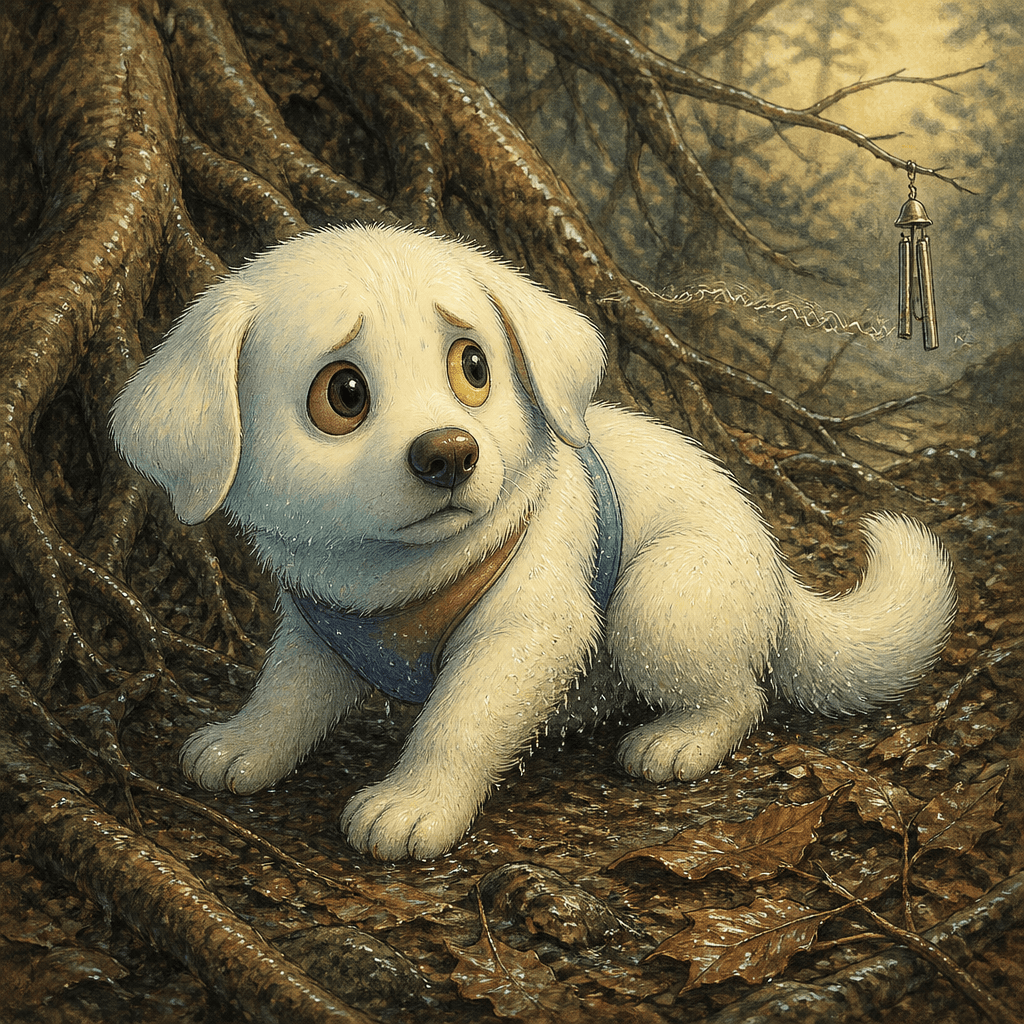
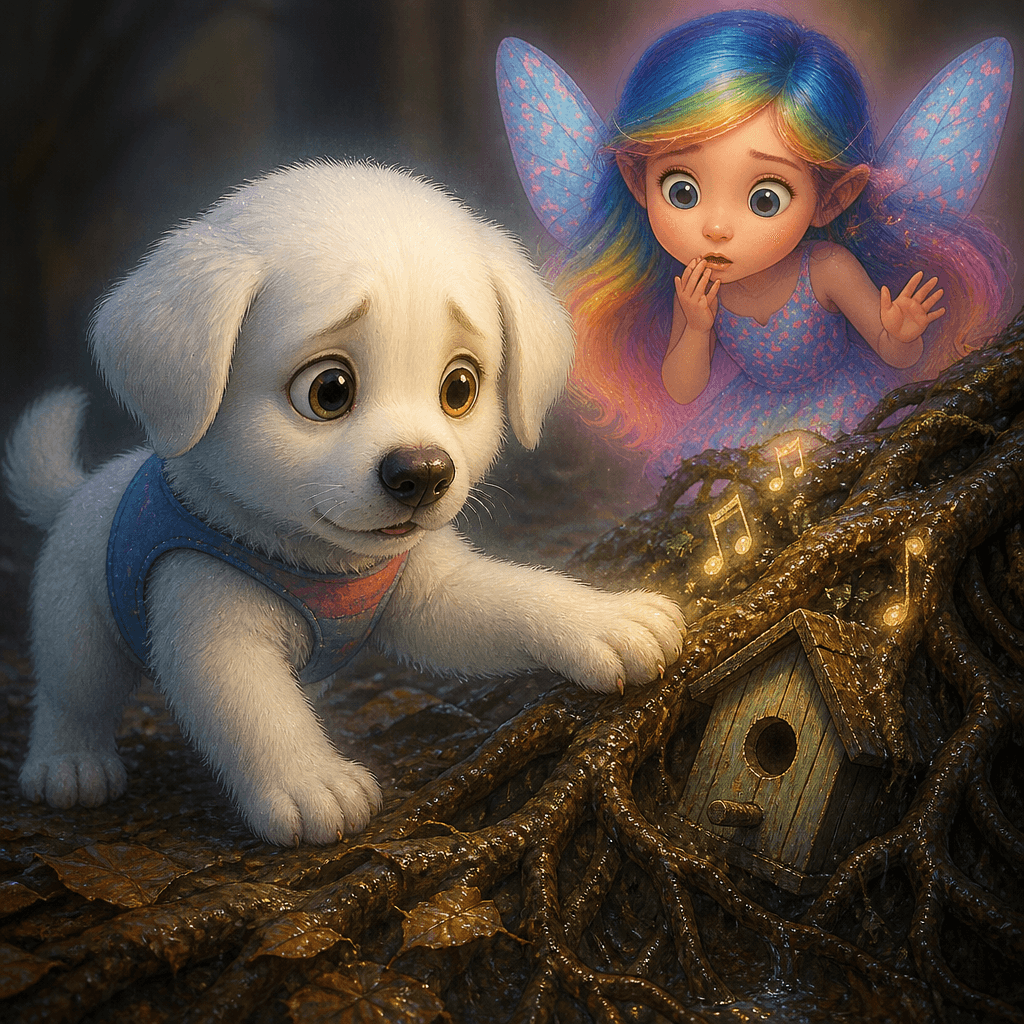
He reached carefully toward the roots, stopping when the chime stuttered—its notes wobbling as if it were frightened too.
“Easy,” Mila murmured, and she sounded like she meant it for the birdhouse, for the Forest, and for herself.
They worked together. Elsa steadied the wooden box with both hands while Mila lifted a root with the flat of her notebook cover, careful not to crack anything. Miran searched for a place where the root could flex without snapping.
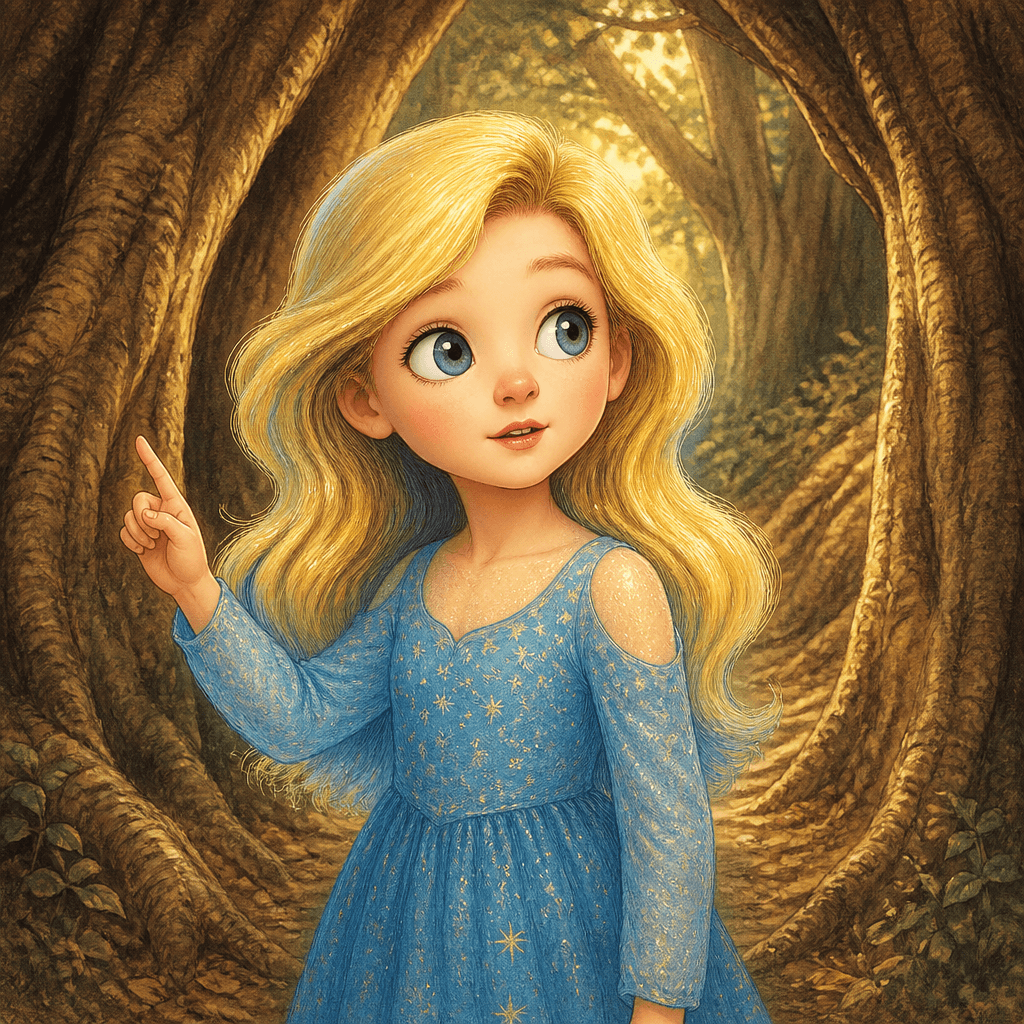
The Forest resisted for a moment. The roots held tight, and the chime’s song turned briefly uneven—like a heart trying to find its rhythm.
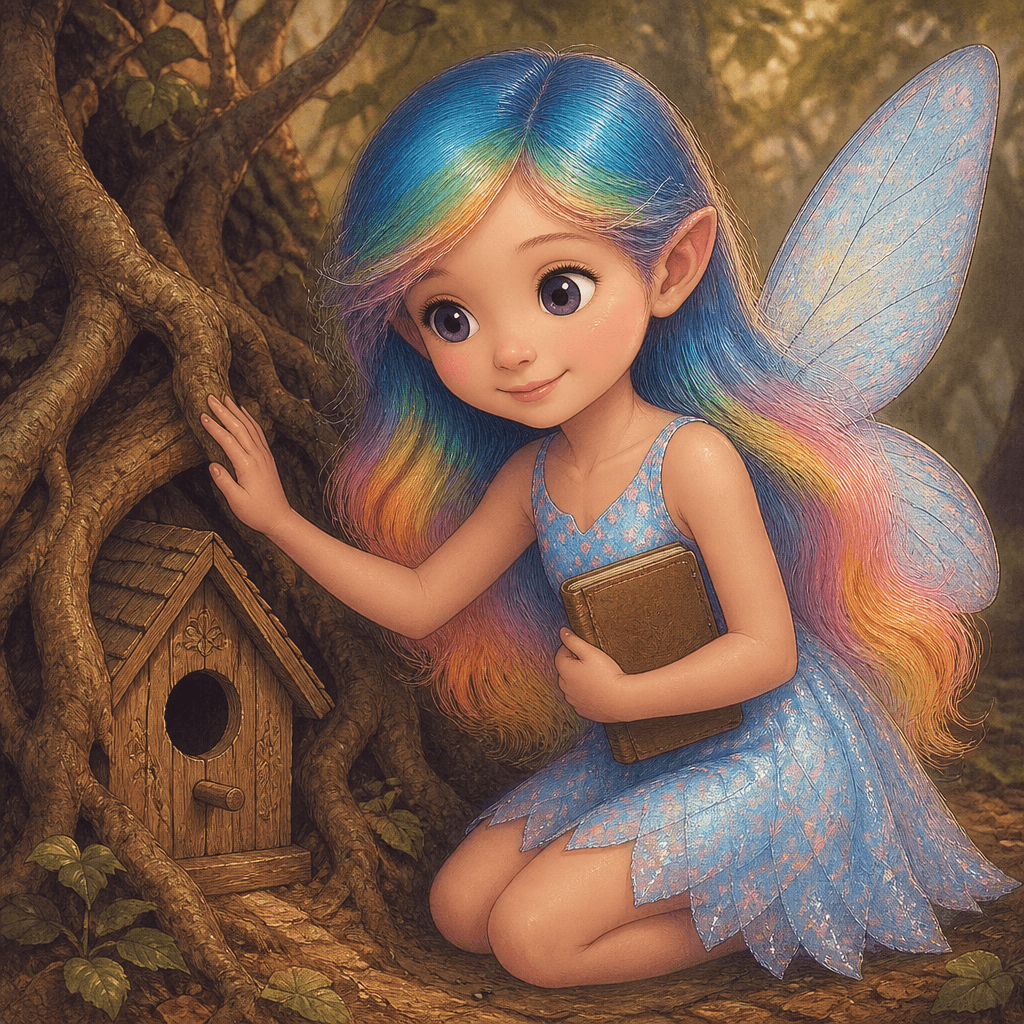
Then, with a slow, reluctant shift, the birdhouse slid free.
The moment it cleared the roots, the chime rang cleanly.
It was beautiful. Three notes, then a pause, then two more—warm and welcoming, as if the Forest had been holding its breath until it could exhale.
Mila’s eyes prickled. “You were stuck,” she said softly.
A small sound fluttered from inside the box—light as dust. They didn’t see a bird, but the warmth of the chime made it feel like something alive had been listening.
Miran let out a breath he hadn’t realized he’d been holding. Pride rose in him, bright and uncomfortable. “I thought we were being… targeted,” he admitted, glancing toward the school window they’d watched from afar during the night. “But it was just trying to talk.”
Still, his thoughts caught on the class. “They’ll be scared anyway,” he worried. “Even if we know the truth.”
Elsa looked at him, steady as stone warmed by sun. “Then we teach them gently,” she said. “You don’t have to pretend you weren’t scared. You just have to help them feel safe.”
They carried the birdhouse back through the hollow paths with permission from the Forest itself—guidance given in the form of easier footing and a softer wind, as if the trees agreed to their care.

At the school, the teacher met them in the hallway where the light felt too flat after the Forest’s glow. Mila explained first, voice quick with excitement. Miran added what he’d understood about the chime’s sound traveling through the trees, and Elsa described how the roots had trapped the birdhouse like a misunderstanding.
The teacher’s eyes widened when Mila showed the notebook pages filled with symbols and observations. “So it wasn’t a warning,” the teacher said slowly, turning the idea over like a delicate stone. “It was a message—something meant to be heard at night.”
She asked them to demonstrate the chime’s notes near a window, where the air could carry sound. When the teacher listened, her face changed—from suspicion to wonder. “This is exactly what we’ll tell the class,” she decided. “Not to hush fear, but to understand it.”
That night, the three of them stood together near the classroom door, listening to the last echoes of conversation. Miran’s shoulders were still tense, but his stomach felt lighter.
Elsa smiled at them, the kind of smile that didn’t demand perfection. “Ready?” she asked.
Inside, the class sat with anxious eyes. Mila held up the birdhouse like a lantern. “We were scared too,” she said, and her honesty made the room quieter. “But the Forest wasn’t trying to scare us. It was trying to be heard.”
Miran swallowed. “I was scared,” he admitted, voice small but clear. “I kept thinking something was watching us. But when we freed the chime, I realized fear can be a question, not just a wall.”
Mila nodded, then surprised herself by letting her own truth out. “And I was brave,” she said. “Not because I didn’t feel nervous. Because I kept going anyway—and I asked for help.”
Elsa’s smile warmed the air. “Listening and teamwork,” she added, “turn spooky mysteries into discoveries.”
The teacher guided the lesson with patience, tracing the carved feather patterns and explaining how sound travels. The class began to look at the Forest’s edge differently, not with dread, but with curiosity.
Mila tucked her notebook under her arm, feeling the weight of ink and answers. Outside, somewhere beyond the school grounds, the Forest’s chime sounded again—soft and certain—like a promise that communication could be found when you stopped assuming the worst.